Tuesday, 26 July 2016

Underground Airlines

Underground Airlines
by Ben Winters
Published July, 2016

Underground Airlines is  set in a modern-day America that feels very familiar - everyone has smartphones, social media is everywhere, there's a Starbucks on every corner - but with a difference. In this version of the present day, the Civil War never happened. In this ever-so-slightly different alternative history, Abraham Lincoln was assassinated before he could take office. In this version of 21st century USA, slavery remains legal in four southern states - the "hard four".


Narrator and mystery man Victor (definitely not his real name) is an escaped slave turned soul-catcher, securing his own freedom by tracking down and returning fellow escapees to their masters. Haunted, conflicted and generally pretty messed up, Victor is hot on the trail of a runaway slave known as "Jackdaw". It's far from Victor's first such case, but there's something different about this one and the plot quickly thickens as Victor comes to realise that Jackdaw is much more than just another runaway.

Victor is a fantastic character. Deeply complex, with a long and complicated back-story, Victor tells himself that he's a good person who does bad things, but he's deeply disturbed by his own choices and the lies he tells. "I do it even now, you see? I play false, I dance and dance. I murmur the stories in shadow of half-shadow, I pretend to myself like I don't remember the names - the details - when in fact I do - I did and I do - I remember all of their names". His complexities keep the story moving (what side is he really on?) and make for a genuinely believable, flawed protagonist.

As Victor uncovers secrets, Underground Airlines weaves a gripping, suspenseful and action-packed tale, equal parts fascinating and horrifying. The world of Underground Airlines is deeply disturbing not so much for the imagine-if aspect (imagine if slavery was still legal!) but because it's so awfully close to the America we see on the news every day.
In Underground Airlines, anyone with dark skin needs to be very careful. Even if you're free, you'd better make sure you don't do anything suspicious. You'd better not be seen in the wrong place at the wrong time. You'd better not be seen in the wrong company. You'd better not be caught with a gun, even if you're legally entitled to carry it. Sound familiar?
It's a different perspective on racism in the USA that makes you wonder how far we've actually come.

It should go without saying, right?
Underground Airlines is deeply affecting because it really feels like things might have happened this way. It's easy to discount the idea that slavery would ever be accepted by an enlightened, western society but Ben Winters weaves in just enough 21st-century corporate detail to make this chillingly believable. In this world, you don't own a "slave", but a "person bound to labor". People are classified by skin colour in a pantone-style Pigmentation Taxonomy - "moderate charcoal, brass highlights #41" or "late-summer honey, warm tone, #76". Officially, cruelty and mistreatment of slaves is not premitted. The largest-scale slave-owners are huge southern companies, the world of slavery becoming so bound up with corporate double-speak that it's easy to imagine the whole thing being somewhat overlooked by the masses.
It's so creepy because it seems like it really could've happened that way - what if there'd been compromise instead of war?

Underground Airlines is fast-paced, compelling and affecting. It's clever, confrontational and very well-written. I absolutely could not put this book down and I could not recommend it more highly - it's truly exceptional.

Friday, 1 July 2016

The Humans

The Humans
by Matt Haig
Published July, 2013

"I know that some of you reading this are convinced that humans are a myth, but I am here to state that they do actually exist. For those that don't know, a human is a real bipedal life form of midrange intelligence, living a largely deluded existence on a small waterlogged planet in a very lonely corner of the universe". So begins Matt Haig's The Humans, a fabulous study of humankind as seen through the eyes of an (initially underwhelmed) extraterrestrial visitor.


One night, Cambridge mathematics professor Andrew Martin solves the Riemann hypothesis (this is apparently an actual mathematical thing), thus discovering the secret behind prime numbers, a very large step towards understanding all of the secrets of the universe. Concerned that humans are far too primitive and violent to be trusted with such knowledge, the advanced extraterrestrial Vonnadorian civilisation sends an agent to Earth. The Vonnadorian agent's mission: to murder the unfortunate Professor Martin, take possession of his body and assassinate anyone who might happen to know about his mathematical breakthrough.

I think this is a mathematician joke. The book is significantly funnier than this.
Despite the Vonnadorians' highly advanced understanding of technology, something goes a wee bit wrong along the way and the would-be assassin arrives on Earth not in the secluded university office he'd expected, but rather in the middle of a busy motorway, stark naked. Disoriented, uncomfortable and extremely confused, the new "Andrew Martin" promptly gets himself arrested and then sent to a psych ward (but not before he discovers some important truths about human life, like "running without clothes is not entirely compatible with external testicles"). A public indecency arrest is just the start as the narrator settles in to life as Andrew Martin, eventually finding himself quite at home amongst humans.

The Humans is funny. It's genuinely, quietly amusing throughout and sprinkled with the odd laugh-out-loud-in-public moment; clever and witty and observational like Douglas Adams on a good day. Matt Haig uses the unusual perspective of his alien narrator fabulously well to show us some uncomfortably amusing truths about ourselves : "Magazines are very popular, despite no human ever feeling better for having read them. Indeed, their chief purpose is to generate a sense of inferiority in the reader that consequently leads to them needing to buy something, which they do, and then they feel even worse, and so need to buy another magazine to see what they can buy next. It is an eternal and unhappy spiral that goes by the name of capitalism and it is really quite popular."
It's amusing and it's entertaining and it's interesting enough to catch you up in the story very quickly, but then before you know it, The Humans has become something more than just a humorous take on human irrationality.
Quite honestly, I'm finding it hard to put into words just how much this book affected me. If it was just a well-written, funny book then that would be enough for me to happily recommend it. But it's not just funny; it's startling and confronting and absolutely beautiful. Much as it pains me to say this, it's inspirational.
Inspiring, like a kitten poster.
I do not enjoy self-help books. I don't think I will ever voluntarily read something from the "Inspirational" section of the bookstore. This book, though - this is self-help for people like me. Any time I'm feeling less than positive, I will re-read this book to remind myself that life is fantastic and humanity is a beautiful thing and (in the words of the narrator) "Failure is a trick of the light".
At one point in the book, the narrator writes a letter, made up of 97 points of advice for humans; any one of these could well go onto a kitten poster, but somehow the context of this list means that this comes across not as trite or sentimental but instead as honest and heartfelt.

I loved this book. I cannot stop thinking about this book. It's a celebration of everything that's wonderful about being a human; it may just be exactly what you need to feel a little more positive about the current state of the world and the future of humans. After all, "Technology won't save humankind. Humans will.". It's a nice thought.

Friday, 17 June 2016

The Passage

The Passage
by Justin Cronin
Published June, 2010


As a reader, one of my absolute favourite things is a "genre" book so spectacularly written that it elevates the whole thing beyond its genre to something truly unique.
Kate Atkinson's Jackson Brodie series is like this (Case Histories; One Good Turn; When Will There Be Good News and Started Early, Took My Dog); detective novels so beautifully written and peopled with such believable characters and such richly detailed settings that they feel utterly real.
Neil Gaiman does this too, writing fantasy novels that are somehow so much more than that; they're more like these layered, subtle meditations on love and time and mortality (even his children's books are like this, The Graveyard Book left me a sobbing, heartbroken mess).
The magnificent Jasper Fforde plays with genres like nobody's business - his award-winning The Big Over-Easy is a dark, noir-style crime novel that just happens to be peopled by a cast of Nursery Rhyme characters. In a crime novel. For adults. It shouldn't really work but it does. Really, really well.

Ok, so this is completely unrelated to The Passage but honestly, SUCH A GOOD BOOK
The Passage is like this too. Ostensibly, it's a kind of blockbuster (film rights having been sold before the book was even released) sci fi/horror novel with vampires. All of which sounds interesting enough that I eventually got around to reading The Passage a good six years after it was published, with relatively low expectations and hopes of a lightweight-but-fun romp of sci fi silliness. Instead, The Passage completely blew my mind.

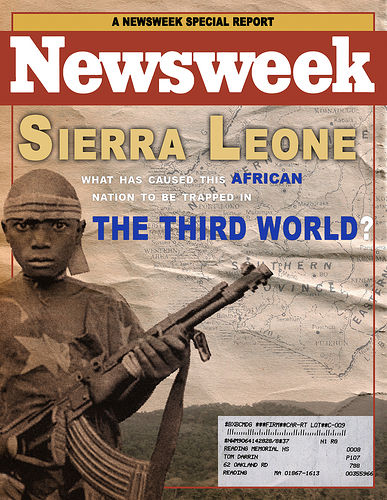
The story begins neither with soulless blood-suckers nor sparkly emo teenagers, but instead with the genuinely affecting story of young mum Jeannette and her much-loved daughter, Amy Harper (named for Harper Lee) Bellafonte. Mistreated by men and unlucky in life, Jeannette's life eventually implodes in such a way that Amy is abandoned at a convent, where she meets the wonderful Sister Lacey Kudoto. Lacey is originally from Sierra Leone, where she experienced childhood brutalities that she has now supressed to the point that she doesn't actually remember any more.

There aren't many vampire novels that also educate you on world history.
Meanwhile, Special Agent Brad Wolgast meets with a series of Death Row inmates, recruiting for a top-secret government project whereby death sentences are waived in return for participation in a very unpleasant medical experiment. Recently divorced, Wolgast is tormented by memories of the young daughter he lost to a heart condition. One of the inmates recruited by Wolgast is formerly-homeless Anthony Carter. Convicted of (but probably not guilty of) the murder of a woman he loved beyond all reason, Carter has clear learning disabilities and a heart of gold.

It's these richly developed characters that really set The Passage apart in the early chapters. Everyone has a back story. A detailed, complex back story that helps to explain their actions and means that their stories really ring true. It's unusual to find a vampire novel that actually makes you cry because you feel bad for a convicted murderer. I am willing to admit, hand on heart, Jeanette Bellafonte's, Lacey Kudoto's, Brad Wolgast's and Anthony Carter's stories all made me cry before I was even 10% of the way through this book. I was an absolute blubbering mess. It was completely ridiculous.

Eventually, we get to the Horror part of the book as government experiments (and when do those ever turn out well?) go horribly wrong, releasing a plague of many-toothed, lightning-fast, ultra violent and practically immortal predators onto an unsuspecting world. Obviously, this is not a new idea so it's hard to explain exactly why it's so incredibly captivating - Justin Cronin is an absolute master of building suspense and before you know it, it's 4am and you still haven't gone to sleep because you MUST FIND OUT WHAT HAPPENS NEXT.

This is a very good question. And also the reason that you may never sleep again. 
At 766 pages, The Passage is clearly a very long book, but it doesn't really feel that way. The book is quite definitively split, with the second half taking place in a notably different time and place than the first half, with a group of entirely new characters. With a large cast of these wonderfully well-developed characters (along with millions of soulless immortal monsters) and an apparently endless series of horrifying events, The Passage managed to keep my attention throughout, for every single one of those 766 pages. In fact, I was so caught up in the whole  thing that I immediately went out and bought the next two books the same day... That's right, there's not just 766 pages; there's three whole books' worth of this fantastic story.

Three whole books! Thousands of pages of this stuff!

The Passage is a beautifully written epic of post-apocalyptic America (not dissimilar in a lot of ways to Cormac McCarthy's wonderful novel The Road), complete with detailed imaginings of the breakdown of society under an overwhelming threat to humanity. It's an absolutely engrossing read, an extremely well-written, perfectly-paced sci fi novel, but also a novel about human life and relationships, full of colour, action, complicated morality and even the odd bit of well-placed humour.
It's not a perfect book - the central character of Amy feels sadly underdeveloped as we don't often get to know what she's thinking; the characters in the second half of the book don't quite have that same depth and distinctiveness as those in the first half (there was much less sobbing on my part in the second half); some characters have this incredibly annoying habit of saying "Flyers!" when they really mean "Fuck!". If you're going to make up swear words, they should really be good ones. Like, "cockwomble" perhaps? These are all pretty minor complaints though - taken as a whole, this book is very, very good.

If you have not already done so (and I'm kind of assuming you have, since I am way behind the times on this one), read this book immediately. But maybe on a weekend, I really wouldn't recommend that whole reading-til-4am-on-a-weeknight thing in retrospect.

Wednesday, 8 June 2016

Faithful

Faithful
by Alice Hoffman
Published November, 2016

The more I read, the less sure I am about what I actually like in a book. Faithful is the kind of book I would never have picked out for myself. Not in a million years. If I'd actually bothered to read the blurb properly beforehand, I would have given this a miss and I would've missed out on an absolute stunner of a novel.


Faithful is the story of Shelby Richmond, survivor of a car accident that destroyed her best friend Helene's life. Wracked with guilt, Shelby goes off the rails a bit and Faithful follows her over the following years as she moves to New York City and tries to get her life back together. To me, this does not sound like the premise for an interesting book. To me, this sounds trite, self-indulgent, sappy and uninspiring. Faithful is none of these things.

In Shelby, Alice Hoffman has created a truly memorable character. Somehow she's spiky and tough, but vulnerable and damaged at the same time. She makes terrible decisions, she pushes people away and she sabotages herself, but you just can't help but like her anyway. I've read very few books where I felt so strongly for a character that I just wanted everything to turn out well for them, even when they were making things difficult for themselves (not dissimilar to the fantastic character of Jude in Hanya Yanagahari's A Little Life). In essence, Faithful is Shelby's story and the reason it works so well is that Shelby is so very well written and completely believable.

Clearly, this Alice Hoffman is a very smart lady.
The relationships in Faithful are complex, nuanced and honest. There is a small but beautifully-written cast of supporting characters made  up of Shelby's friends and family, with every one of them feeling like a real person. Shelby's relationship with her mother is particularly affecting; sweet, sincere and heart-breaking at times. There's also these layers of complexity between characters - the story centres around Shelby, but the supporting characters all have these very believable relationships with each other outside of their relationships with Shelby. There are Shelby's parents, with their complicated, rocky marriage. Shelby's friend Maravelle has plenty of her own issues in raising her three children. Even Shelby's dogs have their own things going on. All in all, it creates this very credible group of people (and dogs) who just feel real.

Faithful is a story of trauma and healing and forgiveness, but never in a Hallmark-movie-of-the-week way. There's no easy fix where Shelby decides to just look on the bright side, and life goes back to how it was before the accident. Instead, Faithful tells a much more honest story about the ways in which we are affected for years afterwards by traumatic events; the strange, destructive and ridiculous ways in which we try to cope; and ultimately the importance of relationships in providing a foundation to rebuild a life. It's an absolutely beautiful story that will stay with you long after you've finished reading.


Wednesday, 18 May 2016

Patient H.M.

Patient H.M.: A Story of Memory, Madness and Family Secrets
by Luke Dittrich
Published August, 2016

I should probably start by confessing that I love brains. Not like a zombie loves brains. More like an obsessive geek who will talk about neuroscience for hours to anyone. Even if that anyone is clearly not interested in the slightest. I spent eight years at university studying psychology and neuroscience, resulting in surprisingly few qualifications but leaving me with a life-long passion for brains.
So, as a history of one of neuroscience's most famous patients, Patient H.M. was always going to be a pretty easy sell for me.


"Patient H.M." was the pseudonym used for Henry Molaison by the researchers and doctors who spent more than sixty years studying him. Affected by severe epilepsy, Henry underwent surgery in the 1950s to remove part of his brain. Following the operation, Henry was left with a complete, debilitating and global amnesia - he was completely unable to form new memories. Henry became the most-studied patient in the history of neuroscience as researchers used his amnesia to better understand the processes of memory and the brain structures involved.

Henry's case is one that many, many people will be familiar with. It's one of the first things covered in any introductory psychology class, along with a few other memorable characters like Phineas Gage (impaled his head on a massive spike and somehow survived) and Walter Freeman (developed the highly inventive and rather disturbing transorbital lobotomy, performed with an icepick).
In some ways this may be pretty familiar ground for a lot of readers, however this book is much more than just another retelling of an interesting amnesia case.

Post-accident Phineas Gage posing with the rod that used to be inside his brain.
Author Luke Dittrich is the grandson of the brilliant (but arguably misguided) neurosurgeon who operated on Henry and caused his amnesia. As such, Dittrich brings a unique perspective to his story, using the H.M. case as a starting point around which to weave an absolutely fascinating history of neuroscience (from the very first references to brain surgery in Ancient Egypt through the lobotomy-obsessed 1930s to H.M's final days in the early 2000s) and relating this back in a very personal way to events within his own family.
This makes for a very, very readable story - I found this book absolutely impossible to put down and for someone who generally avoids non-fiction, that's saying a lot. It's a fantastic blend of biography, history and science writing, all blending into a captivating and cautionary tale of misguided surgeons ruining lives in their attempts to cure psychological problems with a scalpel (or an icepick).
As Dittrich writes,"Neurosurgery, whatever the era, always requires at least two frightening qualities in its practitioners: the will to make forcible entry into another human's brain, and the hubris to believe you can fix the problems inside"

The aforementioned Dr Freeman, lobotomising some poor lady with an icepick. He is thought to have performed this surgery on more than 3,000 patients. 

Fascinating, disturbing and memorable, this is the best non-fiction book I've read in years.

10/10

Friday, 13 May 2016

The Girls

The Girls
by Emma Cline
Published June, 2016

The Girls is probably not the best book I've read this year (which is not to say that it's not good, just that there's some pretty tough competition), but it has some of the best writing I've read in years. Emma Cline is an incredibly talented writer - she's like some kind of crazy talented word-magician with a real gift for bringing language to life.


Set largely in late-1960s California, The Girls follows naive fourteen-year-old Evie Boyd as she encounters a glamorously free-spirited group of older girls and is drawn into their lives in a seemingly peaceful sect, led by the charismatic (if slightly creepy) Russell. Evie starts to spend more time with the group and less time with her family and friends as events start to spiral towards ominously familiar consequences.  

I can't over-emphasise just how good the writing is in The Girls. I started out by highlighting the especially good passages but quite honestly, I'd given up on this by half-way through the book because there's just so much in there that's just beautifully written. The writing is particularly good and wonderfully insightful when it comes to the teenaged narrator's perspective. The Girls sums up so perfectly what it's like to be a teenaged girl - things that I'd forgotten I ever thought or wanted or believed - but reading this book brings it all back like it was yesterday (it wasn't yesterday. Scarily enough, it was a good 20 years ago).
"So much of desire, at that age, was a willful act. Trying so hard to slur the rough, disappointing edges of boys into the shape of someone we could love. We spoke of our desperate need for them with rote and familiar words, like we were reading lines from a play".

Throughout The Girls, Evie makes some pretty stupid decisions. The plot of the book hinges on her doing these really dumb things (like hanging out with a cult, for one) and this would not be credible at all, except that these are exactly the kinds of decisions a star-struck teenager would make. The Girls reminds you of just how desperate teenagers can be - desperate for company, desperate for experience, desperate to be understood and desperate to be noticed - and in this context, everything makes perfect sense.

The Manson girls going to trial in 1970 - Susan Atkins, Patricia Krenwinkel & Laslie van Houten.
There are obvious parallels to the real-life Manson murders and while The Girls is not exactly a retelling of real-life events, it provides some fascinating insight into how such horrific events might have come about; it goes a long way towards explaining the seemingly unexplainable, which is a pretty impressive achievement.

Emma Cline's writing is beautiful, subtle and incredibly insightful. The Girls is very readable, fast-paced and never boring, providing a fascinating glimpse into the mind of a teenager going a little off-the-rails at a very unique time in history.

8/10

Tuesday, 3 May 2016

Different Class

Different Class
by Joanne Harris
Published April, 2016

Let me start by saying that I think Joanne Harris is fabulous. Her earlier books (Five Quarters of the Orange, Blackberry Wine and of course, Chocolat) were some of my absolute favourites back in the early 2000s but I'm ashamed to say that since then, I'd kind of forgotten just how fabulous she is. Different Class serves as a timely reminder that I really need to find copies of everything else she's written, immediately.

How's that for creepy..?
Set in the fictional North Yorkshire town of Malbry (also featured in her novels Blueeyedboy and Gentlemen and Players), Different Class revisits St Oswald's Grammar School, where Latin master Roy Straitley is entering his thirtieth year of teaching. With the school in academic and financial decline, a new headmaster is brought in - complete with Powerpoint, computer literacy, management-speak and a Crisis Management Team. As if this wasn't bad enough for the decidedly old-school Mr Straitley, the new head is also rather familiar to him ("The arrogant, sullen little boy has been reborn as a smiling, smooth-voiced politician"), stirring memories of a twenty-year-old school scandal, when a St Oswald's boy did some very, very bad things.

As chapters alternate between Straitley's present-day narration, Straitley's twenty-years-ago narration and some very disturbing historical diary entries, the story of the scandal becomes clearer and suspense builds beautifully. The unique setting of St Oswald's is beautifully brought to life in all its dusty, scholarly glory, as the world of chalk-covered, gown-wearing Straitley collides disastrously with the dawning age of education-as-business. The characters are wonderfully memorable and Joanne Harris writes with incredible insight, from the perspective of everyone from elderly gentlemen, to tormented adolescents, to a complete psychopath, all of it completely convincing.    

Admittedly, this is completely unrelated but this is also one of the BEST ALBUMS EVER.

Different Class is dark, creepy and incredibly compelling - the characters and the story will draw you in so quickly that a relatively lengthy book becomes a single-sitting read.  It's shadowy and disturbing but it's also genuinely funny in parts, Joanne Harris bringing a wry tone of humour to a story that might otherwise take itself a little too seriously. This comes largely through the wonderfully sardonic tone of narrator Mr Straitley, who is just fabulous. For example: "Penny once went on a course entitled Kids in Counselling, which left her under the delusion that she is approachable and relates well to 'youth issues'", or "Bob Strange seems impressed by the fact that, under the new regime, all St Oswald's current problems will be transferred to a series of policy documents, and will therefore completely cease to exist in the real world", or (on the subject of Parent Teacher evenings) "I shook their hands and invited them in (much as folklore dictates we should invite a vampire before he can feed)".

With Gentlemen and Players (set before Different Class) and Blueeyedboy (set afterwards), Different Class completes a trilogy of novels set in and around Malbry. Many of the characters appear in all three books and there are common settings and themes across the three. While I have now read all three books, I must confess to having completely forgotten everything about Gentlemen and Players (except that it was set at St Oswald's school) and Blueeyedboy (except that the main character was decidedly creepy). This very minimal understanding of the background story did not impact on my enjoyment of Different Class in the slightest. Haven't read the other two books? No problem at all. Different Class works beautifully as a stand-alone book, with no previous reading required. Having said that though, I plan to go back and re-read the other two books ASAP, because I loved these characters so much that I really want to find out more about them.

Different Class is a subtle, masterfully written psychological thriller with a rich backstory and a darkly humorous tone. Like everything Joanne Harris does, it's a great read - give it a go and I guarantee you won't be able to put it down.

9/10